
Cricket Bat Knocking Machine: How It Works, Benefits and Proper Use
A new cricket bat needs proper preparation before it is used with a hard cricket ball. Knocking in is an important part of preparing many English willow bats because it helps compress the surface and reduce the risk of damage during early use.
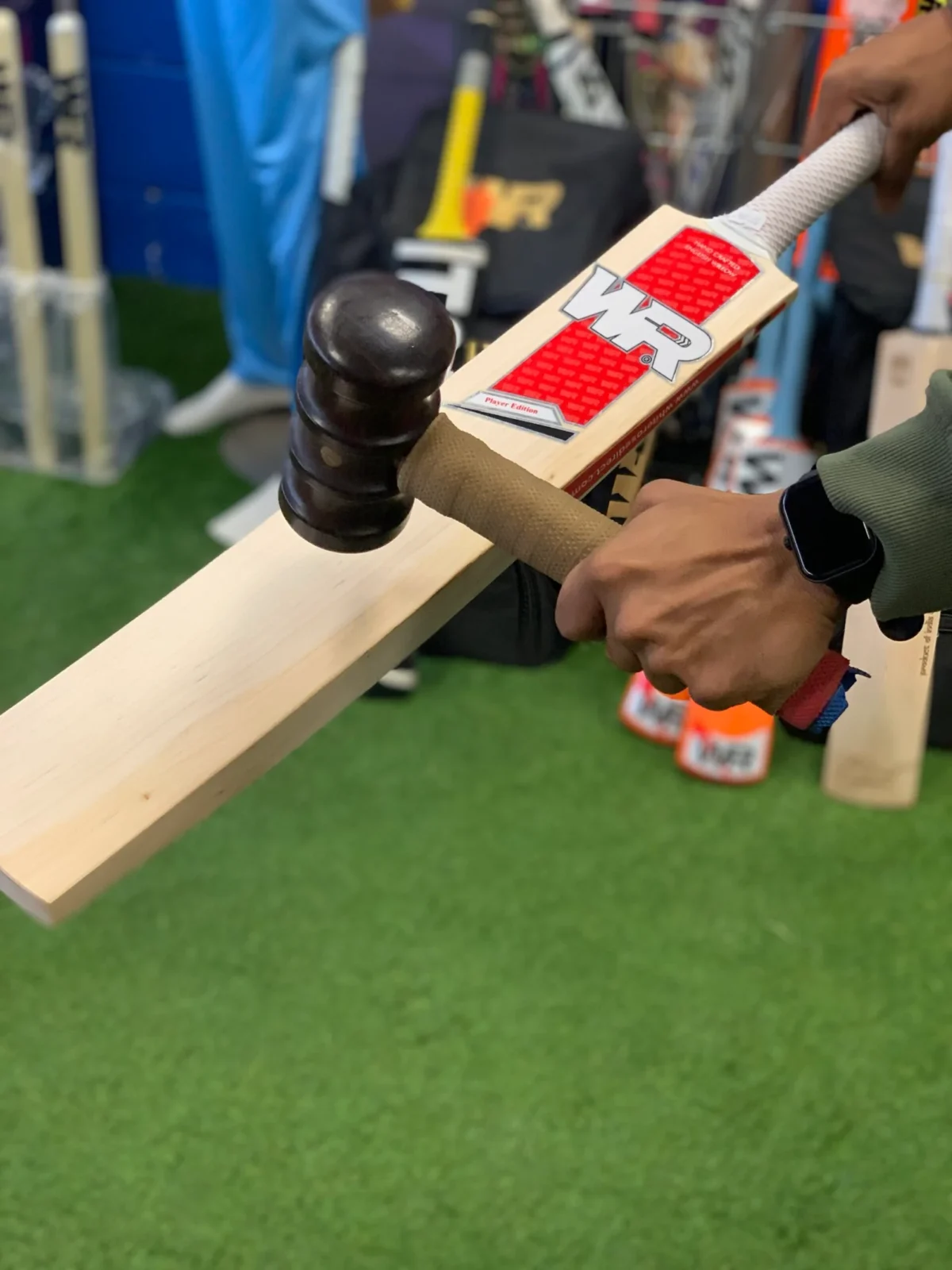
Traditionally, players used a wooden mallet to knock the bat by hand. A cricket bat knocking machine provides a more controlled and repeatable way to complete this process.
These machines are mainly used by cricket clubs, bat specialists, academies and players who prepare several bats. Understanding how they work can help you decide whether machine knocking is suitable for a particular bat.
What Is a Cricket Bat Knocking Machine?
A cricket bat knocking machine is equipment designed to automate or assist the bat knocking-in process.
The machine applies repeated impacts to the bat’s striking area. Depending on the design, the bat can be positioned and secured while the machine delivers controlled blows.
The aim is to gradually prepare the willow for contact with a cricket ball.
A machine does not simply make a bat harder. The process needs to be controlled carefully to avoid unnecessary damage.
Why Does a Cricket Bat Need Knocking In?
Willow is a natural material. A new bat can have a relatively soft playing surface, particularly when it has not been prepared by the manufacturer.
Knocking in gradually compresses the fibres around the hitting area.
This can help the bat cope with repeated impact from a cricket ball.
Proper preparation is especially important before using a new bat in competitive matches.
How Does a Knocking Machine Work?
The exact design differs between machines, but the basic process is similar.
The bat is positioned securely in the machine.
The striking mechanism then delivers repeated impacts to selected areas of the blade.
The operator can usually control factors such as impact intensity, frequency or duration, depending on the machine.
The bat is normally worked progressively rather than receiving maximum force immediately.
Areas That Need Attention
The main striking area of the blade requires the most attention.
The toe and edges may also require careful preparation.
The exact process depends on the bat manufacturer’s recommendations.
The shoulders and splice should not be treated in the same way as the main hitting area because they are more vulnerable parts of the bat.
Machine Knocking vs Hand Knocking
There are two common approaches to preparing a cricket bat.
Hand Knocking
Hand knocking uses a specialist cricket bat mallet.
The player or bat maker controls every impact manually.
This can take considerable time but provides direct control over the process.
Machine Knocking
A machine performs repeated impacts in a controlled manner.
This can make the process faster and more consistent, particularly for professional bat preparation.
Neither method automatically guarantees a better result. Correct settings and proper handling are important.
Benefits of a Cricket Bat Knocking Machine
A knocking machine can provide several practical advantages.
Consistent Impact
The machine can deliver repeated impacts with a more consistent pattern than manual knocking.
Saves Time
Preparing multiple bats by hand can take a significant amount of time.
A machine can reduce the labour involved.
Useful for Bat Specialists
Professional bat makers and cricket shops may prepare many bats during a season.
A machine can make the process more efficient.
Controlled Preparation
Depending on the machine, operators can adjust the process to suit different bats and stages of preparation.
Is Machine Knocking Suitable for Every Bat?
No.
Not every cricket bat requires the same preparation.
Some bats are supplied partially or fully knocked in by the manufacturer.
Some may also have additional protective treatment applied.
Before using a knocking machine, check the bat manufacturer’s instructions.
If the manufacturer states that the bat is ready for immediate use, additional knocking may not be necessary.
English Willow and Kashmir Willow
The type of willow can affect bat preparation.
English willow is widely used for higher-level cricket bats and generally requires careful preparation.
Kashmir willow is commonly used for more affordable cricket bats.
The characteristics of individual bats can vary, so preparation should be based on the specific bat rather than simply its price or willow category.
How Long Does Machine Knocking Take?
There is no universal time for every bat.
The required process depends on:
- Willow grade
- Bat construction
- Existing preparation
- Machine settings
- Manufacturer instructions
- Condition of the bat
A machine should not be operated for an arbitrary period simply because another bat required that amount of time.
The preparation should be gradual and monitored.
Can a Machine Damage a Cricket Bat?
Yes, incorrect use can cause damage.
Excessive impact or unsuitable settings can contribute to problems such as:
- Surface damage
- Edge damage
- Cracks
- Splitting
- Structural problems
This is why experience and correct machine operation are important.
A knocking machine is a tool, not a guarantee of safe preparation.
Checking the Bat During Preparation
The bat should be inspected during the process.
Look for:
- New cracks
- Surface marks
- Excessive indentation
- Edge damage
- Changes around the toe
- Signs of structural weakness
If something appears abnormal, the process should be stopped and the bat assessed.
The Role of Bat Face Protection
Some cricket bats use protective facing or other surface treatments.
These products can help protect the blade from certain types of wear and moisture.
However, protective facing does not remove the need for appropriate preparation when the manufacturer recommends knocking in.
The compatibility of any protective treatment with machine knocking should also be considered.
Using a Cricket Ball After Knocking In
Knocking in does not mean that a bat should immediately be used against the hardest possible deliveries.
Many players gradually introduce ball impacts.
A sensible progression can involve controlled practice before full-speed match use.
This gives the bat and player an opportunity to identify potential issues.
How to Tell if a Bat Is Properly Prepared
There is no single visual test that guarantees a bat is fully ready.
An experienced bat maker may assess the blade by examining its surface and response to controlled impacts.
Small surface marks do not necessarily mean the bat has failed.
However, visible cracks or structural damage should not be ignored.
Common Mistakes When Using a Knocking Machine
Using Too Much Force
More force does not necessarily mean better preparation.
Ignoring the Edges
Edges require careful treatment because they can be vulnerable to damage.
Continuing After Damage Appears
If cracks or unusual marks appear, continuing the process can make the problem worse.
Ignoring Manufacturer Instructions
Different bats can have different preparation requirements.
Treating Every Bat the Same
Willow varies naturally, so preparation should be appropriate for the individual bat.
Who Uses Bat Knocking Machines?
Knocking machines are particularly useful for:
- Cricket bat manufacturers
- Bat repair specialists
- Cricket retailers
- Professional players
- Cricket academies
- Clubs with several bats
For a player who owns one bat, buying a machine may not always be practical.
Professional preparation can be an alternative.
Is a Cricket Bat Knocking Machine Worth It?
Whether a machine is worthwhile depends on how often it will be used.
For a cricket shop or bat specialist that prepares many bats, the time savings can make a machine useful.
For an individual player who buys one bat every few seasons, professional knocking-in may be more convenient.
The cost of the machine, available space, maintenance and expected usage should all be considered.
Choosing a Cricket Bat Knocking Machine
If you are considering buying one, check several features.
Impact Control
Look for a machine that allows suitable adjustment of the striking force.
Bat Security
The bat should be held securely during operation.
Consistent Operation
A reliable machine should deliver predictable impacts.
Adjustability
Different bats may require different settings.
Build Quality
A machine used regularly should be robust enough for repeated operation.
Safety Features
Moving mechanical components should have appropriate safeguards.
Safety When Operating the Machine
A cricket bat knocking machine contains moving parts and should be treated as workshop equipment.
Operators should:
- Read the manufacturer’s instructions
- Keep hands away from moving components
- Secure the bat correctly
- Check the machine before use
- Use appropriate protective equipment where required
- Keep children away from operating machinery
- Stop the machine before making adjustments
Never attempt to adjust a moving machine.
Frequently Asked Questions
What does a cricket bat knocking machine do?
It delivers controlled repeated impacts to a cricket bat’s blade to help prepare the willow for use with a cricket ball.
Is machine knocking better than hand knocking?
Both methods can work when performed correctly. Machine knocking can provide consistency and save time, while hand knocking gives the operator direct control over every impact.
Does every new cricket bat need knocking in?
Not necessarily. Some bats are supplied pre-prepared or partially knocked in. Always check the manufacturer’s instructions.
Can a knocking machine crack a bat?
Incorrect settings or excessive impact can damage a bat. The process should therefore be controlled and monitored.
Can Kashmir willow bats be machine knocked?
Preparation requirements vary between bats. Check the manufacturer’s guidance before using a machine.
How long should a bat be knocked in?
There is no universal time. It depends on the bat, its existing preparation and the machine settings.
Can I use a cricket ball immediately after machine knocking?
It is generally sensible to introduce ball impacts gradually and follow the manufacturer’s preparation guidance rather than moving straight into full-speed use.
Conclusion
A cricket bat knocking machine can make bat preparation more consistent and efficient, especially for cricket shops, bat specialists, academies and clubs.
The machine works by applying controlled impacts to the willow blade, helping prepare the surface for repeated contact with a cricket ball.
However, correct operation is essential. Excessive force, unsuitable settings or ignoring the manufacturer’s instructions can damage a bat.
Whether you choose machine knocking or traditional hand preparation, the goal should be the same: prepare the bat gradually and carefully so it is ready for regular cricket use.